
A garage door that binds at the same point every cycle is telling you something is wrong. So is one that rides crooked or hangs off its rail. There’s a right way to fix a garage door track, and a lot of wrong ones online.
What the Garage Door Track System Does
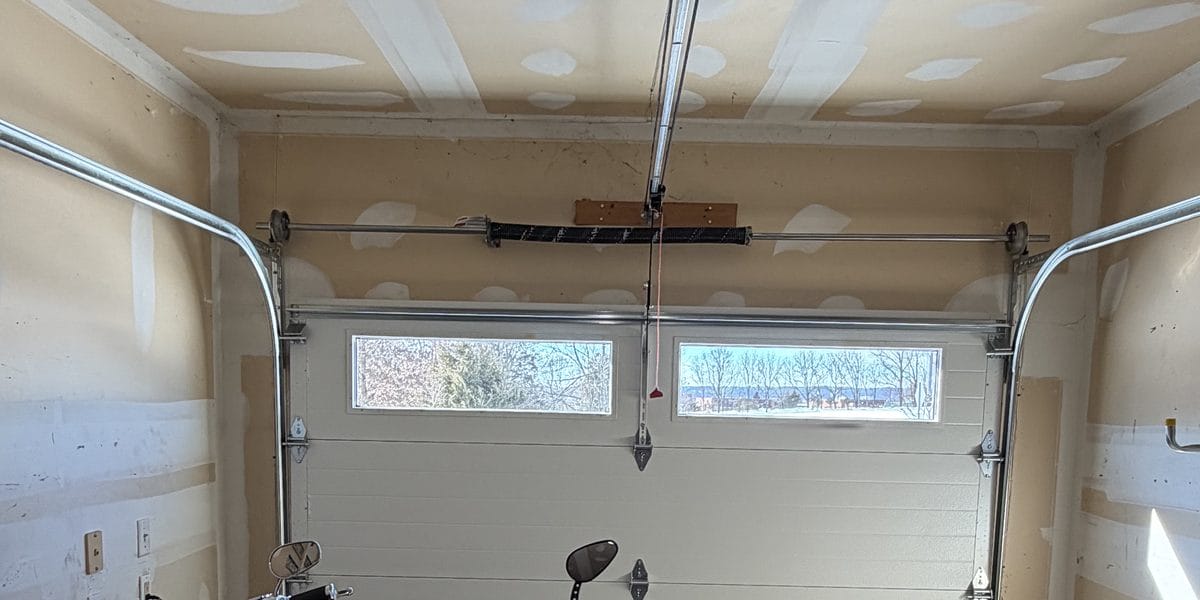
The track is the steel channel that guides the door, not the thing that lifts it. Rollers — wheels mounted to each door panel — ride inside that channel. Track brackets bolt the channel to the wall framing and hold the whole assembly properly aligned.
Torsion or extension springs and steel lift cables carry the weight of a door that can run 130 to 400 pounds, which is what makes it possible to manually lift one that heavy. A vertical track runs up the wall, and a horizontal track runs back along the ceiling, joined by a curved section where the door turns the corner. The garage door opener drives the door along that path, and the metal tracks hold it to one line of travel. Damaged tracks throw that geometry off, and the entire garage door system strains against it on every cycle.
Bent Track, Off-Track Door, or Misaligned Track
A bent garage door track, a misaligned rail, and an off-track door look alike from the driveway. Mechanically, they aren’t the same problem.
| Condition | What's Happening | Common Cause | The Fix |
|---|---|---|---|
Bent track | The steel channel is physically deformed | Vehicle or accidental impact, or a seized roller grinding it outward | Straightening with a track anvil, or full replacement if severely bent |
Misaligned track | The track is intact but out of plumb or misplaced | Loose hardware, or a shifted foundation | Re-bolting into structural framing and resetting garage door track alignment |
Off-track door | Correctly placed rail with jumped rollers | A broken spring or cable | Securing the door's weight, then fixing the hardware failure |
A misaligned garage door track just needs new bolts and a reset — the steel itself is still sound. Try that same fix on a track with a creased radius, though, and it will fail again within a cycle.
What this means for your wallet: A misaligned track is a bolt-and-reset job. A bent or creased track costs more, because the steel itself has to be replaced.
Signs of Garage Door Track Trouble
A track problem doesn't show up out of nowhere. Watch for visible gaps or a kink in the rail. A door stuck halfway through its cycle is another sign.
Grinding or popping noises point to the track brackets or rollers. Scraping noises and uneven movement are red flags too. A healthy track means smooth operation, with no shaking in the panels. For a broader breakdown of what different symptoms point to, our troubleshooting guide breaks down what each one means.
What Causes Garage Door Track Problems
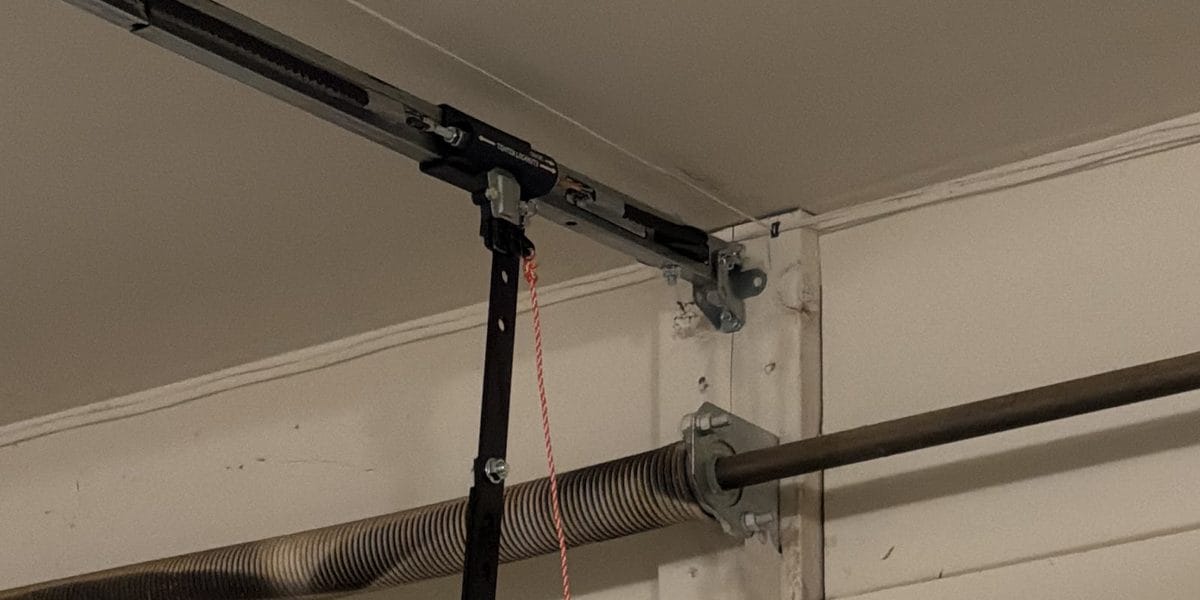
Most track problems build up from years of wear. A single event, like a car bump, is the exception. Loose bolts are the first sign of track misalignment, and debris or worn rollers shift a rail out of place over time.
Eastern Pennsylvania winters add another layer. Freeze-thaw cycles heave concrete slabs, and road salt corrodes bottom rollers until they seize. A seized roller drags hard enough to bend the rail as the opener forces the door through it.
Older homes around East Greenville and Pennsburg complicate this further. Track brackets were lagged into 2x4 wall studs. DASMA's technical standard for garage door jamb framing calls for a minimum of 2x6 lumber at these connection points, and decades of vibration work the thinner studs' bolts loose faster.
A broken spring causes a different kind of failure entirely. See our spring replacement page for how that job gets done.
Why a Garage Door Off Track Is Dangerous to Force
Stop using the door. A garage door off track hangs under real spring tension, and that tension doesn't release just because the door stopped moving.
Loosening the bottom bracket to force a roller back into the channel turns the bracket and cable into projectiles as the door drops. Trying to gently tap a bent rail back into place with a rubber mallet causes similar damage. A snapped cable behind a dropped door needs its own fix, and our cable repair page walks through that.
Never run the opener against a jammed track. Disconnecting the opener before touching a stuck track is a basic safety precaution. Automatic residential garage door operators must comply with CPSC's mandatory federal safety standard, 16 CFR Part 1211, which incorporates UL 325's auto-reverse requirement. The CPSC tracks garage door injuries through its National Electronic Injury Surveillance System, and pinching or crushing injuries from garage doors send people to the emergency room every year.
Is It Safe to Use a Garage Door Off Track?
A garage door off track isn't safe to use, since it hangs on broken cables or a compromised spring while the rest of the system stays fully tensioned. Disconnect the opener and keep the area clear. Call for service instead of trying to move the door manually.
What a Correct Garage Door Track Repair Includes
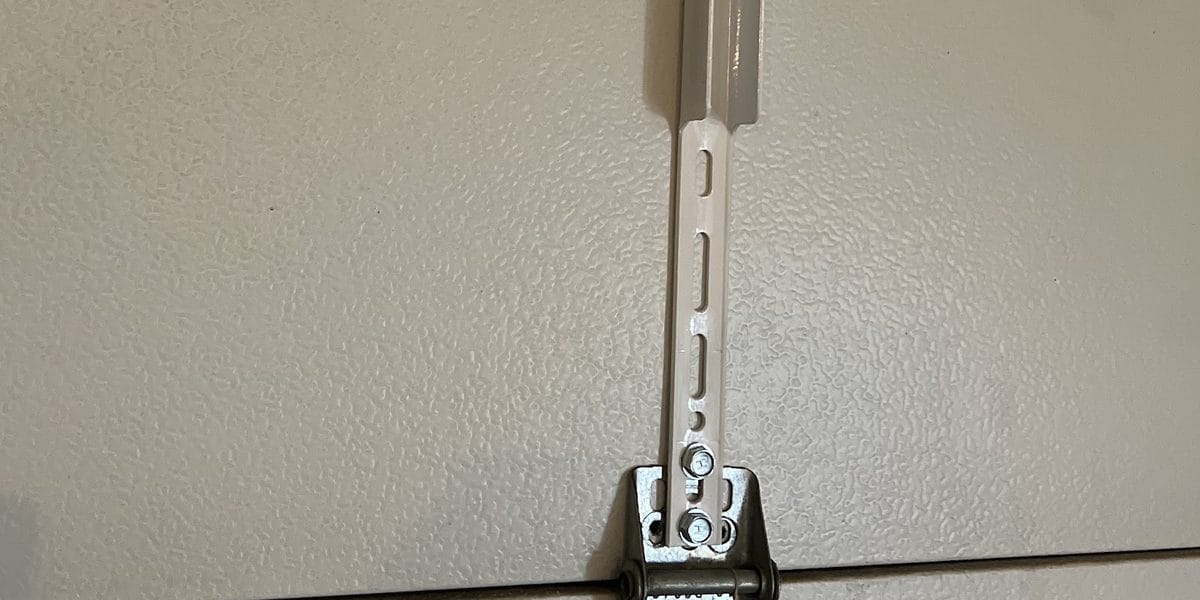
A real repair fixes a garage door track for good. Our repair team secures the door's weight with locking pliers before touching any hardware, then checks the framing behind the track brackets and anchors new bolts into solid lumber.
Minor bends get reshaped with a track anvil, the essential tool for flattening steel without collapsing the channel. A severely bent radius means the steel has lost its integrity, and full track replacement is the only safe fix.
We run a full inspection of the other components, from the rollers to the springs, and replace damaged rollers with sealed models built for local road salt. Skipping that inspection is the most common reason a repair doesn't hold up.
Can a Garage Door Track Be Repaired, or Does It Need Garage Door Track Replacement?
The condition of the steel decides the answer. A track that pulled away from a rotting wall jamb gets repaired with new bolts and solid framing. A track with a sharp crease or significant bending needs full track replacement, since straightening a crease leaves a weak point.
When Track Repair Points to a Broken Spring or Cable
Sometimes the track itself is fine, and the real failure sits upstream in the counterbalance system. When a garage door came off track, the cause was traced back to broken cables or a spring that lost tension unevenly. If your door won't open at all, start with our garage door won't open guide instead.
This job isn't always a straightforward repair. One customer needed his door springs relocated from the rear of the tracks to the front to fit a car lift. His door's manufacturer no longer existed:
Kevin N.
“Great local company. I had an unusual request to move my door springs from the rear of the tracks to the front so I could install a car lift. Although the manufacturer of my door was no longer in business, Bob was able to come up with a solution to make it work. The custom parts required took awhile to arrive, but it’s at no fault of Valley Lock & Door, and Jen scheduled the work as soon as the parts were due to arrive. Tom did the work and it’s exactly what I asked for. The door works better than ever and gives me the room I required.”
That kind of problem-solving is the exact mindset we bring to a bent rail or a torqued track.
Maintenance That Prevents Track Problems
Checking your tracks twice a year catches minor issues before they turn into a full track replacement. Clear debris from the channel and look for loose bolts at the brackets. If a roller looks worn or sounds rough, replace it before it drags the rail out of alignment.
Anything involving the springs or cables is not a safe DIY job.
Local Garage Door Track Repair in the Upper Perkiomen Valley
Valley Lock & Door has built a reputation for reliable service across Pennsburg, East Greenville, and Montgomery, Bucks, Berks, and Lehigh counties since 2011. Our experienced technicians arrive fully equipped and offer same-day service. We're licensed and insured, and that's just how we do business around here.
If your track is showing any of these problems, stop using the door and call us. Schedule a free estimate through our online request form.
Or visit our garage door repair page for the full range of local repair and replacement services we provide. Call us directly at (267) 923-5759.
